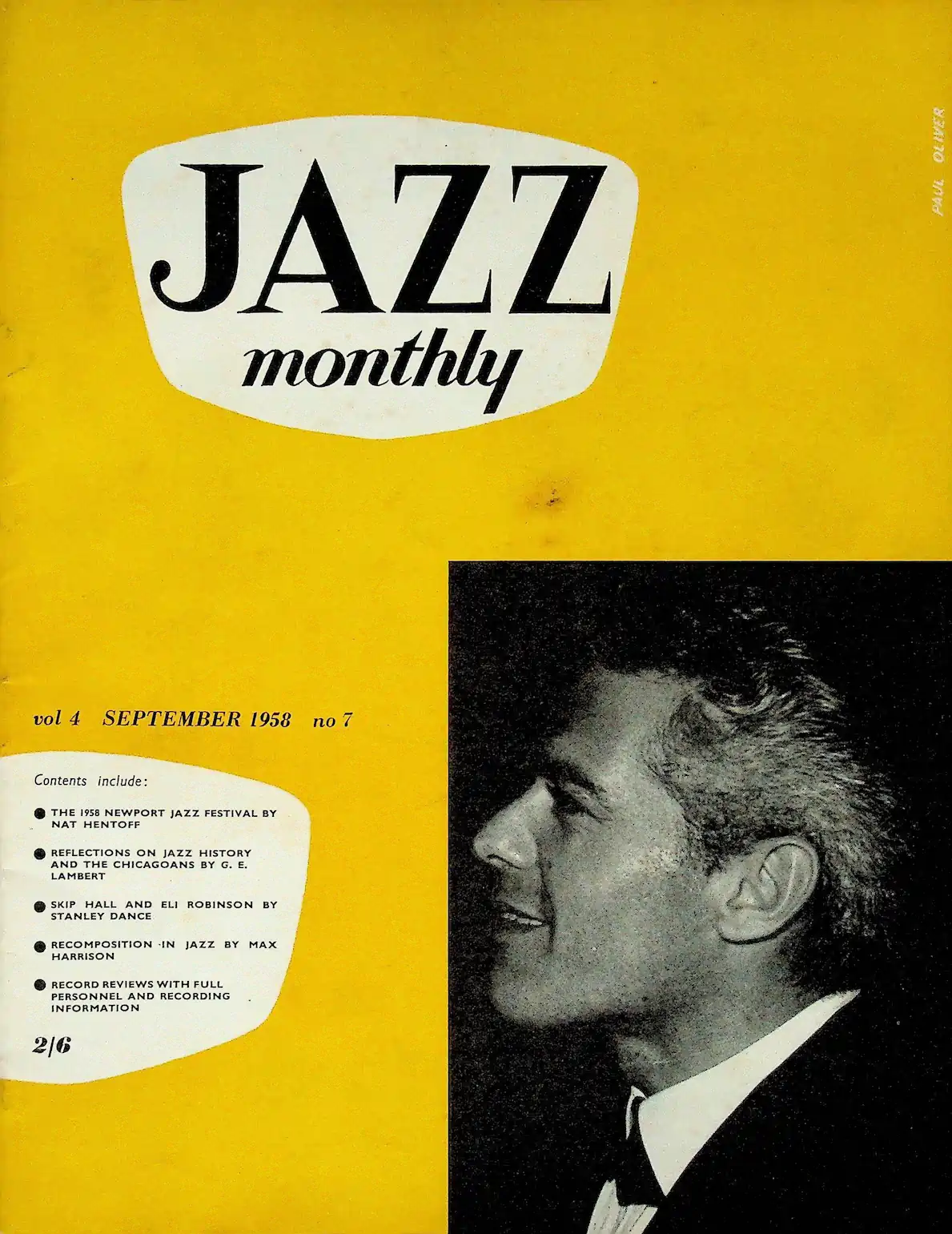
The "intellectual conscience" of jazz
The Rise and Legacy of Jazz Monthly
In the world of music journalism, there are magazines that set trends and those that make history. The British magazine Jazz Monthly, founded in 1955 by Albert McCarthy, undoubtedly belonged to the second category. While its competitors often contented themselves with superficial celebrity worship, this publication established itself among connoisseurs as the "intellectual conscience" of the scene.
1955 - A vision beyond the mainstream
When Albert McCarthy—a passionate historian, collector, and discographer—published the first edition in March 1955, he had a radical goal in mind: he wanted to earn jazz the respect it deserved as an art form. At a time when jazz was often dismissed as mere "entertainment" for smoky basement clubs, McCarthy called for an almost academic examination of the genre.
Interestingly, he managed this ambitious project not from bustling London, but from tranquil St. Austell in Cornwall. This physical distance gave the magazine an almost palpable "detached objectivity"—far away from the hype of the capital, it was possible to analyze things with a cool head.
Depth and meticulousness
What made Jazz Monthly so unique was its uncompromising refusal to bow to commercial pressures. The magazine's style was characterized by three pillars: Sociological depth: The articles were often long and dared to look beyond the sheet music, delving into music theory and social analysis.
Discographic obsession
For collectors, the magazine was a revelation. With a precision that seems admirable today in the digital age, matrix numbers, instrumentation, and recording data were documented in minute detail.
Kritische Unabhängigkeit
The reviewers were feared for their honesty. Contemporaries called their judgments "prickly," as they followed strict quality standards and were not blinded by big names.
A pantheon of critics
The magazine brought together the elite of jazz critics. Max Harrison incisively analyzed the bridges between jazz and classical music, while Alun Morgan became the gold standard for modern jazz. Another special contribution was the work of Paul Oliver, who firmly anchored blues research in the magazine and ensured that the roots of jazz were never forgotten.
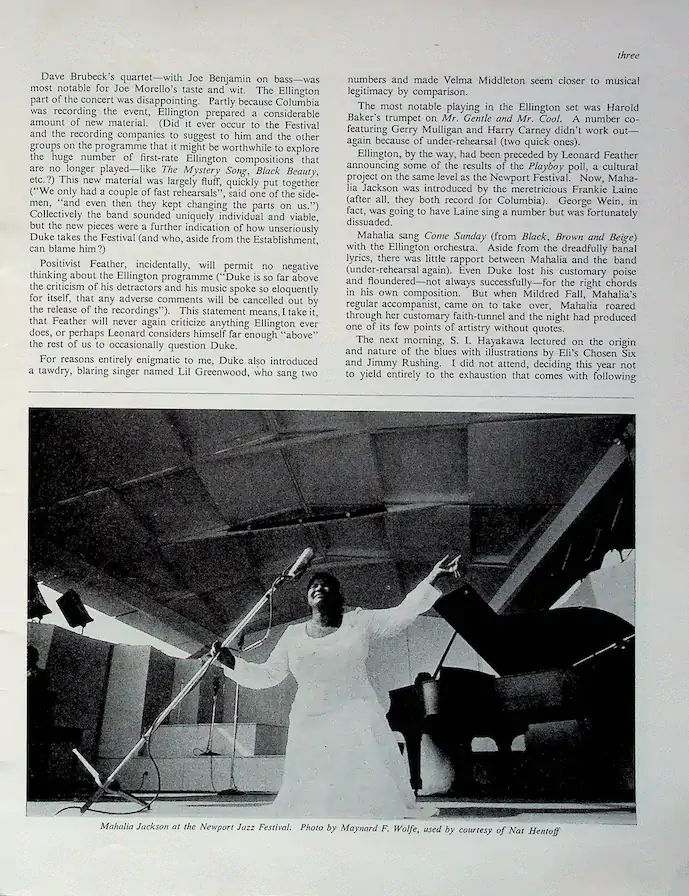
Mahalia Jackson in JAZZmonthly
The archives of Jazz Monthly (1955–1971) contain some very valuable articles about Mahalia Jackson. Since the magazine took an almost scholarly approach to music history, she was treated not only as a "star" but as a fundamental pillar of African American music culture.
Here are the main types of publications and specific references:
1. Key essays and features
One of the most significant contributions to Jazz Monthly was the discussion of Mahalia Jackson's role at the intersection of gospel and jazz.
Raymond Horricks (1958/59)
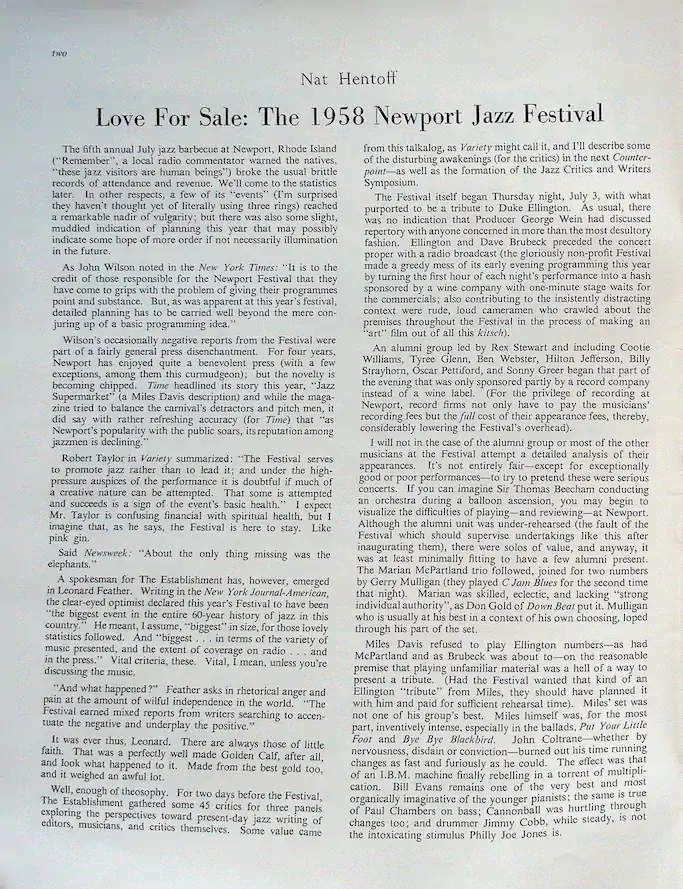
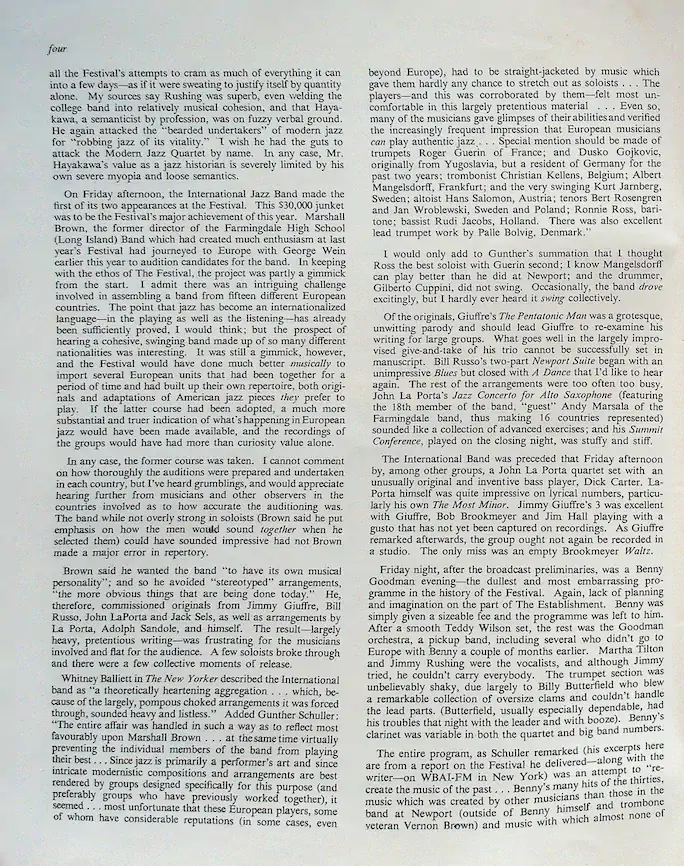
He wrote extensively about Mahalia's groundbreaking performance at the 1958 Newport Jazz Festival. This text is particularly important historically, as it analyzes how a gospel singer emotionally "converted" the traditionally more secular jazz audience.
Albert McCarthy & Nat Hentoff
The founders/editors of Jazz Monthly were both great admirers of hers. In their writings (often in book form, such as Jazz: New Perspectives), Mahalia Jackson was repeatedly referred to as the "only true heir" to the classic blues tradition of Bessie Smith, even though she herself never sang blues.
2. Reviews of the "Columbia" era
The issues published between 1955 and 1965 contain detailed reviews of her most important albums on Columbia Records. The critics at Jazz Monthly were often more harsh than those at their US counterpart DownBeat. Particular attention was paid to: The World’s Greatest Gospel Singer (1955): Here, George Avakian’s production was particularly praised for clearly bringing her voice to the fore.
Black, Brown and Beige (1958)
The collaboration with Duke Ellington. This was a controversial topic in Jazz Monthly, as critics passionately debated whether Mahalia's sacred style suited Ellington's concert jazz (the magazine loved such intellectual debates).
3. Discographic work
One of the magazine's trademarks was the publication of complete discographies. In the 1960s, Jazz Monthly (often in collaboration with experts such as Kurt Mohr) published lists of their early recordings for the Apollo and Bessie Smith labels, which were hardly accessible to collectors in Europe at the time.
The end of an era
Towards the end of the 1960s, the music scene changed. The rock boom pushed jazz to the margins. In 1971, an attempt was made to broaden the magazine's appeal by renaming it Jazz & Blues, but in 1973/74 it was discontinued and merged with Jazz Journal. Why we are still talking about it today
For historians, Jazz Monthly is now an irreplaceable archive. It is a record of a time of upheaval—from swing and bebop to free jazz. It preserved voices and data that would long since have been lost without McCarthy's meticulousness. It remains a testament to an era when music journalism still meant really getting to the bottom of things.
© JAZZmonthly 1958