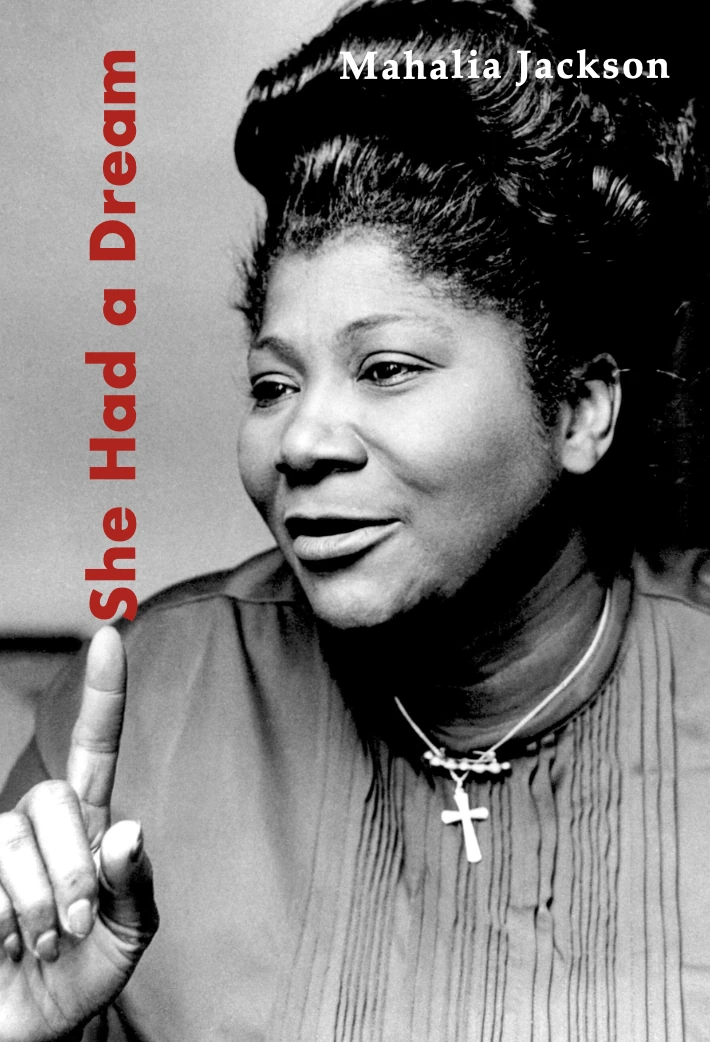
248 pages, 20 photos
Coverfoto © AJ Pics / Alamy
ISBN: 978-3-98-286262-0
This book is not a conventional biography, but a journey to the heart of a legend—visionary, musically rich, and deeply inspiring. It offers a compelling glimpse into the human side of the icon.
Thilo Plaesser offers a knowledgeable and engaging analysis of the following aspects:
Mahalia as a performer, improviser, devout Christian, entrepreneur, and voice of the civil rights movement led by Dr. Martin Luther King. The book offers deep insights into Mahalia’s musical roots and the evolution of gospel music, and provides a well-founded understanding of what improvisation truly means. It sheds light on Mahalia’s unique vocal technique as well as the congenial musical connection she shared with her longtime pianist, Mildred Falls.
At the heart of the book is the principle of resilience.
In a time of global upheaval, Mahalia’s journey serves as a radical guide to self-assertion. Her life serves as a modern guide for the soul and demonstrates how a powerful course of action springs from an inner attitude. Exclusive forewords by her grandniece Valerie Nero, her stepdaughter Sigma Galloway, and her last organist, Dr. Charles Clency, attest to the authenticity of this book. As companions on her journey, they recommend this work as an authoritative bridge to the present, in which Mahalia’s legacy is more important than ever.
Paperback US $24.88 Order HERE
PDF Edition: US$16.95. Order HERE
Sustainable – Available Now
Also available in a German-language edition

The Story Of an American Civil Rights Pioneer
Timothy B. Tyson & Mary D. Williams - 2026
232 pages, 7 photos
ISBN: 978-1-324-09461-6
Available from: Amazon
The work by Timothy B. Tyson and Mary D. Williams stands out for its extraordinary, dual-perspective approach: it combines the meticulous archival research of a renowned civil rights historian with the deep, firsthand perspective of a Black gospel singer. Rather than presenting a traditional chronological biography, the authors weave together historical primary sources and personal reflections with great analytical precision to create a multi-layered documentary narrative.
The result is an engaging work of nonfiction that combines analyses of power with intimate political oral history—a masterful demonstration of how historical biography can achieve the highest standards of both methodology and storytelling.
Oxford University Press 2020
ISBN 9780190461652
Nearly 50 years separate Laurraine Goreau’s first biography from Mark Burford’s publications. Burford, too, cites Goreau’s biography as one of his sources. The major difference, however, is that Burford, a professor at Oxford, is the first to approach the subject with a scholarly approach. While Laurraine Goreau was still traveling with her tape recorder and typewriter—and the internet did not yet exist—today’s authors have access to entirely different resources. Mark Burford also had access to entirely different sources, such as the “Bill Russell” Archive. The result is a scholarly, well-researched work that sheds new light on the subject, making his publications “the definitive work on Mahalia Jackson.”
He provides expert, scientifically sound evidence to refute controversial or incorrect information—such as Mahalia’s correct date of birth. In short, anyone who wants to delve more deeply into the life and work of Mahalia Jackson cannot do without these two volumes.
Oxford University Press 2018
ISBN 978-0-19-063490-2
Nearly 50 years separate Laurraine Goreau’s first biography from Mark Burford’s publications. Burford, too, cites Goreau’s biography as one of his sources. The major difference, however, is that Burford, a professor at Oxford, is the first to approach the subject with a scholarly approach. While Laurraine Goreau was still traveling with her tape recorder and typewriter—and the internet did not yet exist—today’s authors have access to entirely different resources. Mark Burford also had access to entirely different sources, such as the “Bill Russell” Archive. The result is a scholarly, well-researched work that sheds new light on the subject, making his publications “the definitive work on Mahalia Jackson.”
He provides expert, scientifically sound evidence to refute controversial or incorrect information—such as Mahalia’s correct date of birth. In short, these two volumes are indispensable for anyone who wishes to delve more deeply into the life and work of Mahalia Jackson.
Louisiana State University Shreveport 2019
The Noel Masters Series 1
ISBN 5 800135 289951
Like Mark Burford’s publications, the author approaches this topic with an academic rigor, as it is based on his dissertation from “Southern University at Shreveport, Louisiana” in 2013. The book was published in 2019.
The author has been interested in Mahalia Jackson since his youth and is a great admirer of hers. This is also evident in his meticulous research on the subject. The book focuses on Mahalia’s contribution to the civil rights movement. If you exclude the pages with the references, the book is “only” 46 pages long. However, it is only a partial publication of his dissertation.
Through careful and thorough research, combined with his own insights, the author paints a picture of Mahalia Jackson’s role in the civil rights movement. Condensing such a broad topic down to its essentials is an art that is executed flawlessly here. Anyone looking to gain an overview of the subject will find this book a valuable resource. “Along the way,” readers learn about the origins and roots of spirituals, all the way through to modern gospel.
Dr. Chales Clency - Amazon 2025
ISBN 9798280104051
As I read the book, I was immediately struck by the precision with which Dr. Charles Clency recalled his time with Mahalia. He served as Mahalia’s organist from 1967 to 1972. The offer came as a complete surprise, and of course he gratefully accepted it. And right away, they embarked on major tours and concerts. The entire book is a testament to his appreciation of Mahalia as a musician and as a person. This admiration, however, was not one-sided; Mahalia reciprocated it as well. For instance, she always introduced him as a “college professor,” even though he wasn’t one at the time. Charles brought this up with Mahalia, and she remarked that he should take it as a compliment! That was her way of saying THANK YOU. For musicians like me, it’s particularly interesting to read what he writes about his use of the Hammond organ and his equipment, as well as his approach to conducting. You also learn interesting things about what went on before, during, and after the concerts. His appreciation for Mildred Falls particularly moved me, as she was Mahalia’s piano accompanist for 25 years and laid the musical foundation for Mahalia’s work. This also applies to the subsequent accompanists, such as Edward Robinson, Gwendolyn Rosetta Capps Lightner, and the author of this book, Dr. Charles Clency.
The author’s expertise is particularly evident in the description and analysis of Mahalia’s voice (pitch). It is also evident in the brief music-historical digression on the musical and thematic differences between gospel, spirituals, hymns, and other song forms. In addition, the book includes a list categorizing Mahalia’s major songs.
Dr. Chales Clency
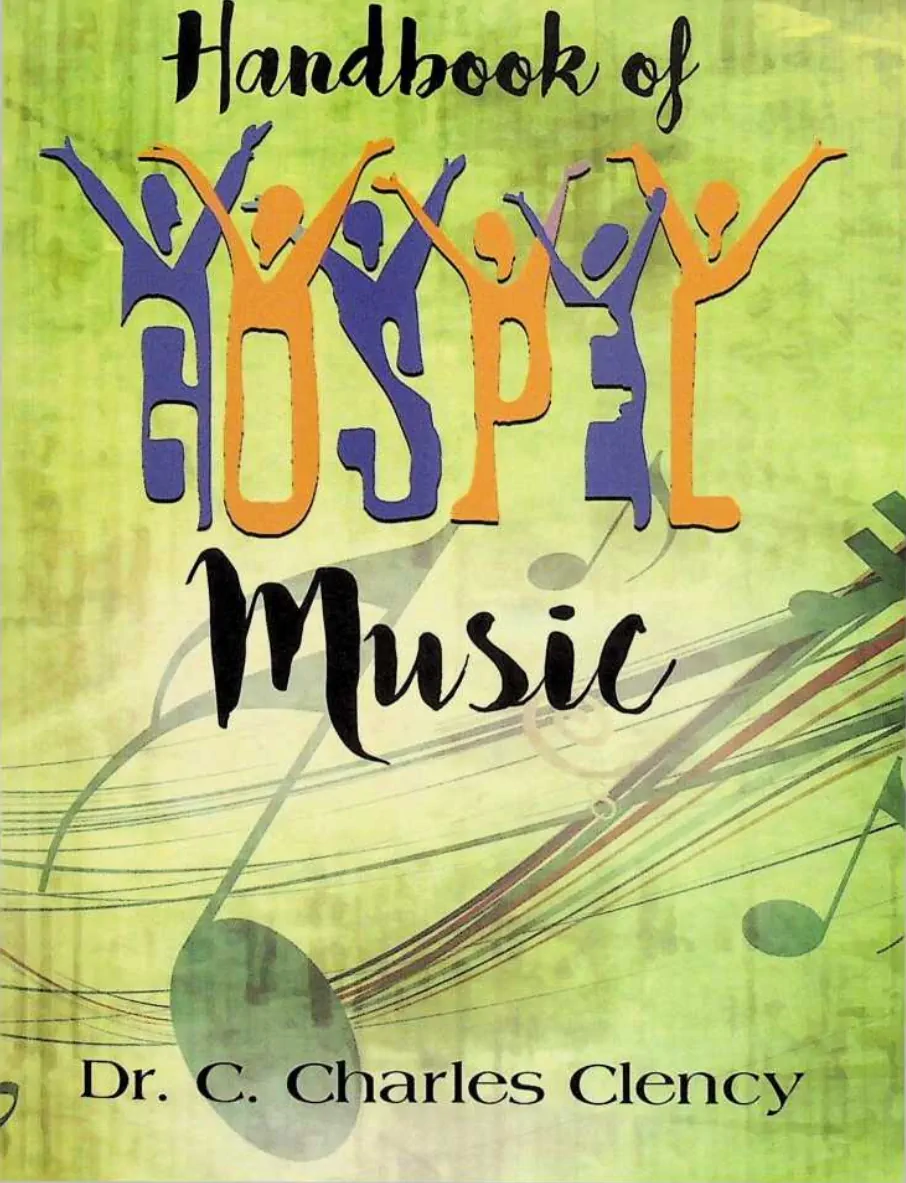
ISBN 978-1-64718-951-8 (BookLocker.com) 2021
Dr. C. Charles Clency’s *Handbook of Gospel Music* is a comprehensive and authoritative guide to African American gospel music. This scholarly work serves as the definitive publication for enthusiasts, musicians, choir directors, and academic institutions around the world. The handbook traces the genre’s development from its African roots and the plantation communities of the rural South to the urban congregations of the North. It examines the key historical and sociological factors—such as the Great Migration and the Great Depression—that led to the emergence and popularity of gospel music in America.
Dr. Clency, himself an experienced musician and educator, was Mahalia Jackson’s last organ accompanist, which has given him unique, firsthand insight into this genre. He defines gospel music as sacred music with roots in the church, whose main elements are distinctive rhythms and improvisation.
The book offers an in-depth exploration of the history of gospel music and highlights the contributions of numerous African American gospel artists from three stylistic periods—pioneers, trendsetters, and contemporary artists—over the past 100 years. In addition, the *Handbook of Gospel Music* provides practical recommendations and strategies for improving the work of gospel choir directors. It offers insights into topics such as choir organization, breathing and vocal techniques, and methods for conducting effective rehearsals. In this definitive work, discover why gospel music—characterized by faith, joy, passion, and a celebration of its culture—remains a dominant cultural element of the African American experience to this day.
An indispensable work for anyone who wants to understand the soul of gospel music.
Wowpublishing 2022
ISBN 978-0-98896-446-4
Janis F. Kearney is a renowned American author, lecturer, and publisher who was born in 1953 in the cotton fields of Gould, Arkansas. After earning a degree in journalism from the University of Arkansas in 1976, she made a name for herself as the publisher of the historic Arkansas State Press Newspaper, which had previously been led by civil rights icon Daisy L. Gatson Bates. Her career took a unique turn when she served as President Bill Clinton’s personal diarist from 1995 to 2001—a role that no one had ever held in the U.S. presidency before her. Kearney is a prolific writer and co-author of 17 books. Her book on Mahalia Jackson stands out from all others on the subject because it is a blend of “nonfiction” and fiction. At first I was skeptical, but after reading it, I was convinced. When Mahalia set out from New Orleans to Chicago with her aunt, she imagines a conversation between the two—one that, of course, was never actually recorded. But her deep knowledge of the subject makes this conversation not only entirely believable but also entertaining. That’s why this book is particularly well-suited for readers who are interested in learning about Mahalia for the first time.
Hawthorn Books, Inc. Publishers New York 1961
Library Of Congress Catalogue Card Number 66-22315
Mahalia Jackson’s autobiography, *Movin’ On Up*, which she co-authored with Evan McLeod Wylie, was published by Hawthorn Books in 1966. The book was intended to chronicle Mahalia’s life story and offer her personal perspective on her career. Although *Movin’ On Up* was intended to be Mahalia’s authentic narrative, it is questionable whether it truly succeeded in doing so. There are indications that Mahalia expressed frustration over Wylie’s “misrepresentations” of her oral history and the presence of “misinformation.” This suggests potential inaccuracies or the co-author’s interpretation of her words, which did not fully align with Mahalia’s own recollections.
Nevertheless, the book offers intimate insights into Mahalia Jackson's life—insights that are, in a sense, firsthand—and is the very first "Mahalia book" ever written.
AVON BOOKS / Hawthorn Books 1969
Library Of Congress Catalogue Card Number 66-22315
Mahalia Jackson’s autobiography, *Movin’ On Up*, which she co-authored with Evan McLeod Wylie, was published by Hawthorn Books in 1966. The book was intended to chronicle Mahalia’s life story and offer her personal perspective on her career. Although *Movin’ On Up* was intended to be Mahalia’s authentic narrative, it is questionable whether it truly succeeded in doing so. There are indications that Mahalia expressed frustration over Wylie’s “misrepresentations” of her oral history and the presence of “misinformation.” This suggests potential inaccuracies or the co-author’s interpretation of her words, which did not fully align with Mahalia’s own recollections.
Nevertheless, the book offers intimate insights into Mahalia Jackson’s life—insights that are, in a sense, firsthand—and is the very first “Mahalia book” ever published. While the first edition was dedicated to her then-husband, Sigmond Galloway, and her stepdaughter, Sigma Galloway, the second edition is dedicated to her aunt, Mahalia Paul, and “all children everywhere.”
Word Books, Publisher Waco, Texas
Library of Congress Catalogue Card Number 74-82654
This biography is, so to speak, the “original biography” that all subsequent books draw upon. Laurraine served as Mahalia’s assistant in her final years and accompanied her on her last major tours. Immediately after Mahalia’s death, she interviewed countless people who had known Mahalia. As a result, their memories were still very fresh. Many of these interviews have been preserved. She recorded the interviews at the time using a tape recorder. She transcribed some of them herself on a typewriter.
Spanning over 600 pages, this information is presented in great detail in some cases. As a result, it is often difficult to follow her train of thought, since she refers to names and events so matter-of-factly, which can be confusing for the uninitiated reader. Nevertheless, these accounts are incredibly valuable, as many things would otherwise have been forgotten. According to Mahalia’s own autobiography, this book was the first official biography. In addition to the original edition, a reprint is now available.
Oxford University Press 1992
ISBN 0-19-507144-1
This book is rightly one of the most controversial books about Mahalia Jackson. Jules Schwerin was a significant figure in Mahalia Jackson’s life, known as her biographer and filmmaker. He was the producer of Mahalia Jackson’s Grammy-winning album for Best Gospel and Soul in 1976 and the creator of a documentary film of the same name about Mahalia. Schwerin does not cite any of the sources typically used in such works but relies almost exclusively on his personal experiences. It took him a long time to gain Mahalia’s attention and trust, only to lose it again quickly. At times, one gets the feeling that certain accounts are his way of settling a “personal score” with Mahalia. This fact is all the more serious given that the book was not published until 1992—long after Mahalia’s death. Mark Burford clearly demonstrates that some elements in Schwerin’s book are “purely fictional.” This calls his credibility into question overall, especially since readers often have no choice but to rely on his statements, as they cannot be substantiated in any way.
Nevertheless—or rather, unfortunately—this book is one of the most widely read books about Mahalia Jackson.
Historic New Orleans Collection 1998
ISBN 0-917860-41-1
The book *Jazz Scrapbook* by Bill Russell is a very special work about the early days of jazz, particularly in New Orleans. It is not a traditional biography in the sense of a continuous narrative, but rather, as the title suggests, a "scrapbook" of information, images, and insights.
Here is the most important information about the book:
William Wagner "Bill" Russell (1905–1992) was an influential American composer, author, producer, and musician in the Dixieland jazz genre. He was known for his tireless passion for preserving the history of early jazz. Russell collected a vast amount of material—including interviews, letters, sheet music, recordings, and photographs—which today forms an important part of the William Russell Jazz Collection at the Historic New Orleans Collection. He knew many of the early jazz greats personally, including Louis Armstrong, and was, above all, Mahalia Jackson’s advisor, friend, assistant, and, in a sense, biographer for three years, as he recorded many events in his diary and made audio recordings of Mahalia.
THE NEW PRESS, New York 1995 (Neuauflage von 1977)
ISBN 978-1-56584-319-6
""Talking to Myself: A Memoir of My Times" is an important book by the renowned American author, oral historian, and radio host Studs Terkel. It was published in 1977 and differs from many of his other works in that, unlike his famous oral histories—in which he primarily collects and presents the voices of others (as in *Working* or *The Good War*)—it is explicitly autobiographical. Although it is an autobiography, it is not a conventional, linear retelling of the events of Terkel’s life. Instead, it is a “memoir of his time,” closely interwoven with the countless individuals he has met and interviewed throughout his long career.
The book is rich in anecdotes, moments, and conversations with a wide variety of people, ranging from ordinary folks to historical figures such as Martin Luther King Jr., Mahalia Jackson, Bertrand Russell, and Federico Fellini. These interactions form the core of the book and shape Terkel’s own thoughts and experiences.
Oxford University Press 1992
ISBN 0-19-509057-8
This book, published by Oxford University Press, is considered a seminal work on the history of gospel blues, particularly the career of Thomas Andrew Dorsey.
The author, Michael W. Harris, focuses on Thomas Andrew Dorsey (1899–1993), a central figure in the development of modern gospel. Dorsey, also known as “Georgia Tom,” enjoyed considerable success as a blues pianist and composer in the 1920s. He later turned to church music and incorporated blues elements into his sacred compositions, leading to the emergence of gospel blues. The book examines how gospel blues became popular in the late 1930s in the African American Protestant churches of the American Midwest and Northeast, particularly among African American migrants from the Deep South.
Harris shows how, despite initial controversy over the blending of "sacred" texts with "secular" blues melodies, Dorsey established a new musical form that had an immense impact on African American churches and religion. Dorsey composed over 400 gospel songs and is still considered one of the most prolific composers and publishers of this movement.
The book not only explores the musical evolution but also the social forces and cultural contexts that have shaped this music, offering insights into African American religion and culture.
Oxford University Press 1956
Marshall W. Stearns' *The Story of Jazz*, first published in 1956, is not only a book about jazz but also a cornerstone of jazz historiography itself. To this day, this work is considered one of the most influential and comprehensive accounts of the development of this unique musical form.
A Literature Professor in the Service of Jazz
Behind this seminal work was Marshall Winslow Stearns (1908–1966), a remarkable figure. Originally a professor of medieval English literature at Hunter College, Stearns developed a deep passion for jazz that would shape his life. He was far more than an academic; he was a tireless researcher who spent decades listening to and studying jazz and conducting firsthand interviews with musicians. His dedication culminated in 1952 with the founding of the Institute of Jazz Studies, which is now based at Rutgers University and is considered one of the world’s most important archives and research centers for jazz. Stearns’ intellectual curiosity and deep understanding of the subject made him a pioneer in jazz research, whose influence extended far beyond *The Story of Jazz*. He also co-authored the posthumously published work *Jazz Dance: The Story of American Vernacular Dance* with his wife, Jean Stearns. Another important aspect is the examination of the cultural impact of jazz on America and the world—a musical form that moved from the margins of society to the center of popular culture.
Upon its initial publication on December 31, 1956, *The Story of Jazz* was immediately recognized as a groundbreaking work. It was one of the first books to offer such a systematic and comprehensive account of the development of jazz. For this reason, it quickly became a standard textbook in jazz history courses and served as a first—and often fundamental—introduction to the subject for countless readers. To this day, Stearns’ work is valued for its thoroughness, scholarly precision, and captivating narrative style. It is more than just a collection of facts; it is a passionate tribute to a musical form that Stearns deeply loved and understood. “The Story of Jazz” remains an indispensable guide for anyone wishing to explore the complex and fascinating history of jazz.
PIOQUANT editions 2000
ISBN 987-1-909281-81-3
"New Orleans Jazz, Mahalia Jackson, and the Philosophy of Art" is Volume 2 of the series "The Complete Works of Hans Rookmaaker." Hans Rookmaaker (1922–1977) was a Dutch art historian and philosopher known for his writings on art from a Reformed Christian perspective. This book is particularly interesting for readers who wish to explore the history of jazz and gospel, the philosophy of art, and the connection between faith and culture.
This book brings together Rookmaaker’s writings on jazz, blues, and spirituals, particularly his in-depth analysis of these musical forms within the context of his Christian philosophy. He had a lifelong interest in and great enthusiasm for these musical styles, which are reflected in this volume. Mahalia Jackson occupies a special place in Rookmaaker’s work. He saw her as one of the few contemporary Christian female musicians of value and significance whose gospel singing represented an authentic and meaningful form of expression of faith. He believed that “the only meaningful Christian music (that emerged in the twentieth century) comes in the form of the gospel songs of Mahalia Jackson and others.” The volume also includes Rookmaaker’s philosophical writings, which reveal the roots of his art-historical work in the “Philosophy of the Cosmonomic Idea” (Dooyeweerdian philosophy). This understanding is essential for properly grasping his philosophical framework. The book examines the development of jazz, blues, and spirituals—from their origins in Africa, through slavery and the emergence of minstrel shows, brass bands, and ragtime, to the development of early jazz in New Orleans, the rise of swing and modern jazz, and the evolution of spirituals.
University of Illinois Press 2024
ISBN 987-0-252-08798-1
J. Mayo "Ink" Williams (1894-1980):
J. Mayo Williams was a truly unique and groundbreaking figure in American history whose influence spanned several fields. Williams was the first African American producer at a major record label and the most successful producer of music by Black artists—particularly blues and jazz—from the 1920s through the 1940s. His nickname, “Ink,” stemmed from his ability to secure contracts with talented African American musicians.
He discovered and recorded an impressive roster of blues and jazz legends, including Ma Rainey, Blind Lemon Jefferson, Tampa Red, Thomas A. Dorsey (before his gospel career, known as "Georgia Tom"), Memphis Minnie, Sister Rosetta Tharpe, Peetie Wheatstraw, and Louis Jordan.
Before entering the music industry, Williams was an outstanding athlete. He played college football at Brown University (an Ivy League school) and was one of the first Black players in the early NFL, playing for the Hammond Pros, among other teams. He was also the first Black official to officiate an NFL game in 1921. He later founded his own record labels, including Harlem Records and Ebony Records, for which a young Muddy Waters also recorded. Williams’ life was a remarkable journey of an ambitious and aspiring man who steadfastly forged his own path despite the racism of white society and class tensions within the Black community. The book is an interesting addition to the subject of Mahalia Jackson, as it reflects a comprehensive picture of the Black community and its music, in which Mahalia is, of course, mentioned.
University of Illinois Press 2015
ISBN 978-0-252-08069-2
Robert M. Marovich is a renowned gospel music historian, author, radio host, and music archivist. He is the founder and editor-in-chief of the *Journal of Gospel Music* (formerly *The Black Gospel Blog*) and the producer and host of the radio program *Gospel Memories*. The book focuses on Chicago’s pivotal role in the emergence and development of gospel music in the United States. It traces the evolution of gospel music from its early hymns and camp meetings to its growth as the “sacred soundtrack” of Chicago’s major Black Protestant churches.
""A City Called Heaven" has been highly praised by critics as an "extraordinary work" and a "long-overdue history of the city and the people at the heart of gospel music." It is described as a "meticulously researched chronology" that interweaves not only gospel music but also African American music, history, and religion. It is considered an indispensable contribution to the history of African American music. And, of course, Mahalia Jackson receives special attention in this context.
Franklin Watts Library Edition
ISBN 0-531-11228-4
The book was published in 1996 by Franklin Watts (Scholastic Library Publishing) and is part of the "Impact Biographies Series." The book is written primarily for a young audience—more specifically, for readers aged 11 to 15. This edition, too, is an important contribution for the younger generation. The book was well received by critics, including "School Library Journal" and "Booklist."
Reviews describe it as a "touching, even moving biography" that explores the influence of the "Queen of Gospel" on her audience. Particular praise is given to the book's emphasis on Mahalia's desire to sing only inspiring music and its detailed portrayal of her life, told with the same passion that characterized Mahalia Jackson herself.
Smithsonian Institution Press 1992
ISBN 1-56098-167-9
Bernice Johnson Reagon is a prominent figure in African American music and history. She is a respected historian, curator at the Smithsonian’s National Museum of American History, singer, composer, and activist. Reagon is the founder and artistic director of the renowned a cappella quintet Sweet Honey in the Rock. She is known for her in-depth research and her ability to bring the history of African American music to life. She has authored numerous works and served as the conceptual producer for the radio and recording projects “Wade in the Water: African American Sacred Music Traditions,” which includes this book.
The book is a collection of essays focusing on six of the most influential pioneers of African American gospel music. It sheds light on their lives, their musical contributions, and their impact on American and international music culture. The book’s title is taken from a well-known and significant gospel hymn by Charles Albert Tindley. The book is aimed at a broad audience interested in music history, African American culture, religious studies, and the development of the gospel genre. It has been praised by critics as an “outstanding collection of essays” and a “comprehensive and invaluable history” of gospel music. It is an essential contribution to the understanding of Black gospel music and its profound impact.
Enslow Publishers, Inc. 2003
ISBN 0-7660-2115-7
Barbara Kramer specializes in biographies for children and young adults and has written numerous other books about historical figures and contemporary personalities. Her goal is to tell inspiring stories that appeal to young readers. The book *Mahalia Jackson: The Voice of Gospel and Civil Rights* was published by Enslow Pub Inc. It is part of the “African-American Biographies” series and is aimed at a young audience, typically students in grades 6 through 10 (ages approximately 11–15). The book traces Mahalia Jackson’s life from her childhood in New Orleans to her success as a world-famous gospel singer. Particular emphasis is placed on Jackson’s unique style, which helped popularize gospel music. A significant portion of the book is devoted to Mahalia’s activism in the civil rights movement. It highlights her role as a friend of Dr. Martin Luther King Jr., her performances at rallies, and her commitment to using her voice and music to support the civil rights movement and break down hatred and fear between the races.
A special book designed to raise awareness among the younger generation of Mahalia Jackson's historical significance.
Aladdin Paperbacks 1995
ISBN 0-689-71786-5
Montrew Dunham (1919–2017) was a prolific author of historical biographies for young readers. She wrote numerous books in the "Childhood of Famous Americans" series, including biographies of Neil Armstrong, Thurgood Marshall, Langston Hughes, and Ronald Reagan. Her style is designed to make complex life stories accessible and engaging for young readers.
The book *Mahalia Jackson—The Young Gospel Singer* is a biography also aimed at a young audience. As the title suggests, the book focuses on Mahalia Jackson’s early years, from her childhood in poverty in New Orleans to her first steps as a gospel singer. It explores how her early experiences and surroundings shaped her. It is an inspiring story about how someone can pursue their dreams despite adversity and use their voice to spread a message of hope and love. A source of inspiration for young readers!
Amistad - Harper Collins Publishers 2015
ISBN 978-0-06-087944-0
For young readers and anyone interested in the history of the African American civil rights movement and the world of gospel music, the book *Walking with Kings and Queens* is a shining example of biographical literature. Published by the renowned Amistad Press, an imprint of HarperCollins Publishers, this picture book tells the inspiring life story of Mahalia Jackson.
Written by Nina Nolan and beautifully illustrated by John Holyfield, the book was published on January 27, 2015, and is primarily aimed at preschool- through elementary-school-aged children (approximately 4 to 8 years old). Its 32 pages trace Mahalia Jackson’s journey. However, the heart of the book lies not only in Mahalia’s musical career but also in her profound involvement in the American civil rights movement. It highlights her friendship and collaboration with Dr. Martin Luther King Jr. and culminates in an emotional depiction of her performance at the historic March on Washington in 1963. The choice of Amistad as the publisher underscores the book’s significance. Amistad is a highly respected imprint of HarperCollins Publishers that, since its founding, has been dedicated to publishing works by Black authors and portraying Black experiences.
“Walking with Kings and Queens” is thus not only a heartfelt introduction to the life of an extraordinary artist, but also a testament to the significance of gospel music and its influence on social change in the United States. It is a book that helps young readers understand the power of the voice and of faith, and keeps alive the memory of an era of struggle and hope.
Dell Publishing Co. Inc. New York 1974 / 1975
DELL 5170
Jesse Louis Jackson, born on October 8, 1941, is a prominent American civil rights activist, Baptist pastor, and politician. As a young protégé of Dr. Martin Luther King Jr., he played an important role in the civil rights movement of the 1960s and was actively involved in the marches in Selma.
This book is his personal tribute to another great figure who also played a major role in the civil rights movement: Mahalia Jackson. It is a brief overview of her life. It contains no new or extraordinary information. Its value lies rather in the author’s respect for Mahalia’s life’s work.
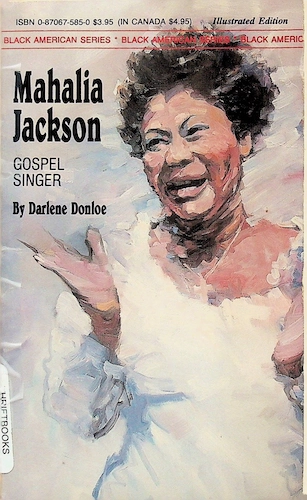
Darlene Donloe, 1992
ISBN 0-87067-585-0
The book offers a biography of Mahalia Jackson that focuses on her life as a gospel singer and her efforts to break down racial barriers through her music and activism. It chronicles her journey from humble beginnings in New Orleans, her powerful contralto voice, and her rise to international fame as "The Greatest Gospel Singer in the World."
The book highlights her significant role in the civil rights movement, including her close relationship with Martin Luther King Jr., and her appearances at various rallies and important events. It also explores her personal struggles, such as her experience with racial discrimination despite her fame.
The book is considered a valuable resource for understanding Mahalia Jackson's life and her contributions to both music and social justice. The book also includes many very interesting photos!
Aurora Publishers Incorporated 1970
Library Of Congress Catalog Card Number 74-114780
More Than Just Cooking
In 1970, just two years before her death, the legendary gospel singer Mahalia Jackson, in collaboration with Andrewnetta Jones, published her cookbook *Mahalia Jackson Cooks Soul* through Aurora Publishers. But this book was far more than just a collection of recipes; it was a reflection of her business philosophy, her philanthropy, and her deep commitment to the Black community.
A Culinary Heritage Grounded in Principles
Mahalia Jackson’s cookbook fit seamlessly into her existing business ventures, which ranged from beauty salons and flower shops to real estate investments. It embodied her firm conviction that providing food was a basic necessity that should even take precedence over evangelism. The book was closely linked to Maulana Karenga’s Kwanzaa holiday and its fundamental African cultural principles, such as unity, self-determination, and collective responsibility. It was an expression of courage, zeal, and drive, with the overarching goal of promoting economic self-sufficiency and mutual aid within the Black community.
Recipes from "Soul Bowl" and Beyond
One of the book’s highlights is undoubtedly the “Soul Bowl,” a hearty dish of offal and gravy served over rice. Other mainstays on her menu included breaded chicken (known for its salty and crispy flavor, which was said to put Kentucky Fried Chicken to shame), catfish, hush puppies, fried liver, and classic desserts like sweet potato pie.
Although Mahalia Jackson herself was from New Orleans, her cookbook surprisingly contains only a few Creole dishes. Her personal favorite dish, oyster bread, for example, was replaced by a recipe for oyster stew. The book is full of practical tips for saving time and money and focuses on “feeding many mouths with little food” and making simple dishes flavorful through clever combinations of spices. The collection of recipes is remarkably diverse: it ranges from traditional soul food dishes like tripe, neck bones, and brains to unexpected creations like “Oven Beef Burgundy” and “Tuna Burgers.”
Clean design and practical usability
The cookbook stands out for its clear and straightforward preparation instructions. The pages are also adorned with atmospheric photos of Mahalia at the stove, which give the book a personal touch.
A Lasting Legacy
Although it is unclear how many of the recipes actually came directly from Mahalia Jackson or were compiled from various sources, "Mahalia Jackson Cooks Soul" remains a fascinating document of her time and her vision. The original books are rare. To get a copy, you have to spend up to a few hundred dollars.
Have you ever heard of Mahalia Jackson's cookbook, or even tried one of her recipes?